
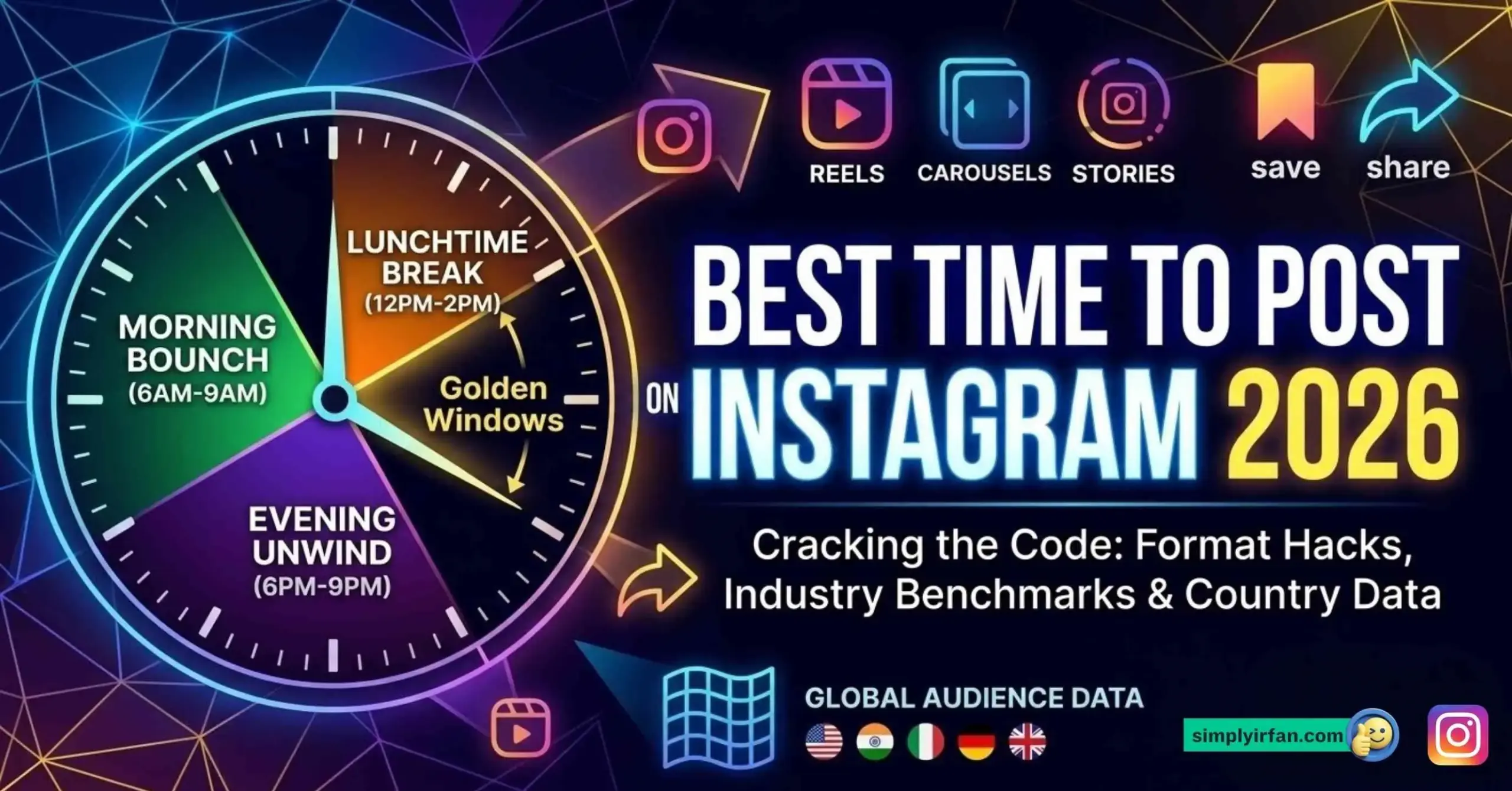
Forget the generic “9 to 5” rule. The best time to post on Instagram in 2026 is hyper-personalized. The algorithm now prioritizes immediate interaction and dwell time (how long people look).
- The Golden Windows: Generally, aim for pre-work (6 AM – 8 AM), lunch breaks (12 PM – 1 PM), and post-work unwind (7 PM – 9 PM) in your target audience’s local time.
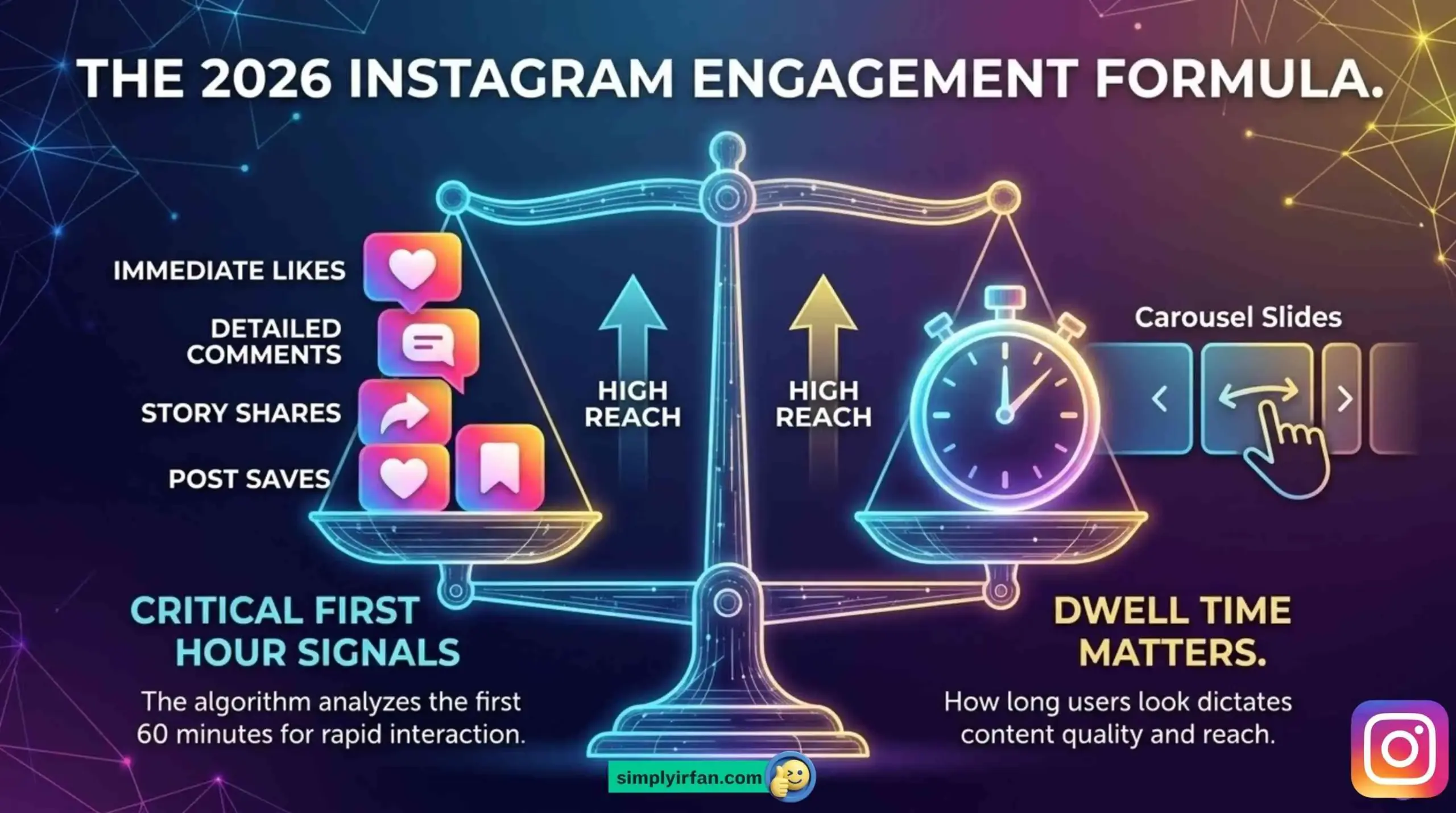
- The Critical First Hour: Your goal is maximum likes, comments, and shares within the first 60 minutes.
- Consistency > Timing: Posting reliably when your specific audience is active is more important than chasing a global peak.
- Hacks: Use Collabs, interactive stickers, and high-value carousels to maximize dwell time and force immediate engagement signals.
The Myth of the “Perfect” Time: Why 2026 is Different
Remember back in 2022 when everyone said Tuesday at 11 AM was the magical, universally perfect moment to post? Yeah, that world is gone. We’ve entered the era of the hyper-personalized feed.
The Instagram algorithm in 2026 doesn’t just look at when you post; it looks at who is online right now and what they are most likely to interact with immediately. The definition of the best time to post on Instagram has shifted from a static data point to a fluid, moving target.
It feels complex, but think of it this way: You aren’t trying to catch a single massive wave. You are trying to catch several micro-waves that are specific to your community. Your goal isn’t just visibility; it’s immediate, meaningful interaction.
Imagine you are trying to reach busy college students. Posting at 9 AM is useless; they are in class. Posting at 11:30 PM, when they are winding down and doom-scrolling before bed? That’s your golden hour. It’s all about empathy and understanding the daily rhythm of the people you want to connect with.
1. The New Engagement Science: Dwell Time and Immediate Signals
The Instagram algorithm’s primary goal is user retention. It wants people staying on the app, not closing it. To achieve this, it prioritizes content that generates two specific signals right after you hit ‘share’.
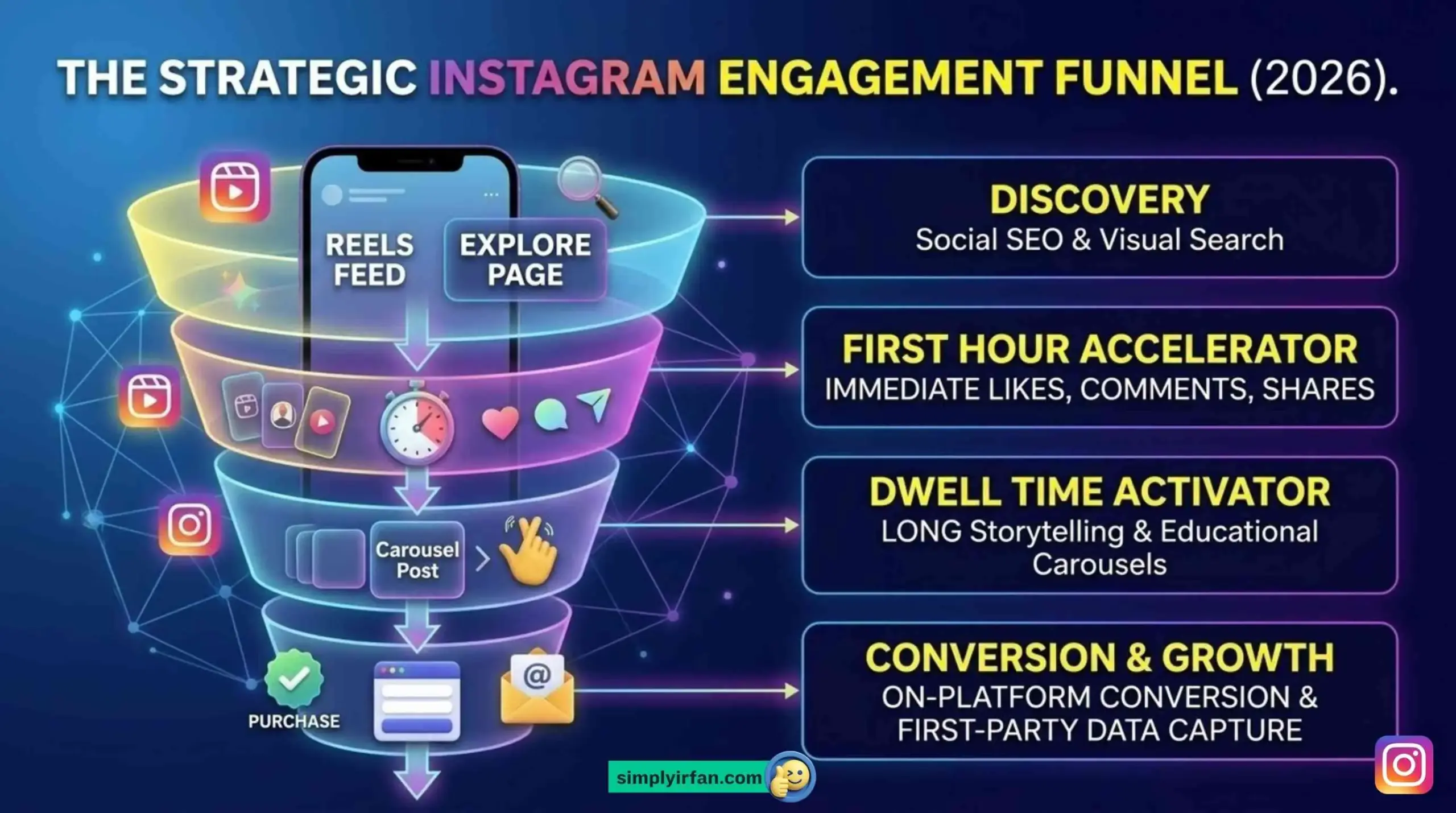
The Critical First Hour Think of the first 60 minutes your post is live as its “audition.” If your content gets a flood of likes, detailed comments, and saves (the new “super-like”) immediately, the algorithm recognizes it as high-value and starts pushing it to a wider audience. If it gets crickets, it’s basically dead in the water. This is why aligning your timing with your audience’s peak activity is non-negotiable.
The Rise of “Dwell Time” In 2026, dwell time—the amount of seconds or minutes a user spends looking at your content—is a massive ranking factor. This means short, generic captions are a liability. Carousels (especially educational ones) and longer, storytelling captions are essential because they force people to stay on your post.
Example 1: Driving Dwell Time with Educational Carousels
- The Post: A graphic designer shares “5 Common Branding Mistakes New Businesses Make.”
- AEO Execution: Instead of one single image, they create a 5-slide carousel. Slide 1 is a strong hook (“Stop doing these 5 things!”). Slides 2-4 each detail one mistake and a quick fix. Slide 5 is a Call to Action (CTA) like “Save this for your next launch!”
- The Result: Users spend an average of 45 seconds sliding through and reading. The algorithm sees this high dwell time and immediate “save” activity, validating the content’s quality and pushing it to the Explore page.
2. Navigating the Post-Third-Party Cookie World: First-Party Data is Key
The landscape of digital advertising has shifted dramatically. With third-party tracking now a memory, your business’s growth in 2026 relies on first-party data—the information you collect directly from your audience. This data allows you to create highly targeted campaigns and deliver personalized experiences.
The “Value Exchange” Strategy The key to successful digital marketing strategies is built on a “value exchange.” Users will willingly give you their data—email address, phone number, interests—if you offer something truly valuable in return. In 2026, this goes beyond a generic discount. It might be a unique interactive tool, an exclusive community, or an educational guide.
Example 2: Leveraging Interactive Tools for Data Collection
A local real estate agency creates a tool called “Home Value Predictor.” Visitors enter their address and some basic property details. To receive the personalized prediction and a free market analysis, they must enter their email. The agency not only collects a high-quality lead (first-party data) but also knows exactly where that potential customer is located and what their needs are, allowing for extremely precise and personalized follow-up.
Statistics on the Importance of First-Party Data
- 73% of consumers prefer to buy from brands that use personalized data (e.g., remembering preferences), not just intrusive ads.
- Businesses with robust first-party data see a 2x increase in conversion rates on their targeted email campaigns.
- 60% of marketers in 2026 report that first-party data is their most valuable asset for customer retention.
3. Hyper-Personalization and Strategic Timing Hacks
When you combine AEO insights with first-party data, you get hyper-personalization. You are no longer guessing what your audience likes; you know what they are interested in and when they are active. This is where strategic timing hacks can give your business a competitive edge on Instagram.
The most successful digital marketing strategies for 2026 involve moving beyond general time windows and mastering micro-timing.
Collabs for Shared High-Active Audiences Use Instagram Collabs to tap into a shared, highly active audience. The key is finding a complementary business where your core audiences overlap, but your products don’t compete.
Example 3: Strategic Collab Timing
- The Business: An eco-friendly fitness brand.
- The Collab: A plant-based meal prep company.
- The Tactic: They discover both of their audiences are highly active on Instagram on Sunday evenings between 7 PM and 9 PM (planning for the week ahead).
- The Post: They create a collaborative post (showing one workout outfit and a sample healthy meal) and schedule it for precisely that window.
- The Result: The post appears on both of their profile grids and is pushed to both audiences simultaneously, leading to double the initial engagement. The algorithm sees this immediate, dual-audience interaction as extremely valuable, increasing its reach on the Explore page.
2026 Engagement Time Windows (General Guide)
- Pre-Work (6 AM – 8 AM): High engagement from professionals checking the app first thing. Ideal for news, quick tips, and motivational content.
- Lunch Breaks (12 PM – 1 PM): A brief spike in activity. Use fast-paced Reels and interactive stories.
- Post-Work Unwind (7 PM – 9 PM): The peak window. Perfect for long-form storytelling, storytelling captions, and engaging educational carousels.
Pro Tip: Your ultimate goal is not just visibility; it’s immediate interaction within that critical first hour. A general peak is useless if your community isn’t online. Focus on consistently showing up when they are.
The Science of Timing: Why “When” Still Matters in 2026
If you’ve been feeling like your Instagram reach is hitting a brick wall, you’re not alone. In 2026, the algorithm has moved from being chronological to interest-based, and now to predictive. It doesn’t just show content to people who are active; it predicts who is ready to save and share right now.
Think of the best time to post on Instagram as catching a train. If you’re too early, the platform is empty. If you’re too late, your content gets buried under a mountain of newer posts. The “sweet spot” is the first 60 minutes. This is your “audition” period where the algorithm decides if your post is a hit or a miss based on how fast people react.
Imagine a fitness coach, Sarah. She used to post at 10 PM because that’s when she finished work. Her reach was terrible. When she switched to 6 AM—catching her “early bird” fitness audience right as they woke up—her engagement tripled. Why? Because her followers were in the exact mindset to care about a workout tip at 6 AM, not as they were falling asleep.
Country-Wise Cheat Sheet: When the World Scrolls
Your “local time” is the only clock that matters. However, if your audience is global, you have to play a game of “Time Zone Tetris.” Based on 2026 traffic data, here is when users are most active across major regions:
Regional Peak Performance Windows
| Region | Best Time (Local) | Why? |
| North America | 7 AM – 9 AM | The “Commute Scroll” is the biggest traffic spike. |
| Europe | 11 AM – 1 PM | Lunch breaks are the primary window for high-intent browsing. |
| India & Asia | 8 PM – 10 PM | Users in this region have the highest “unwind” engagement late at night. |
| Australia | 8 AM – 10 AM | Strongest engagement happens during the morning “coffee start.” |
Actionable Insight: If you have a split audience between the US and India, aim for 8 AM EST. This catches the US morning crowd and the India evening crowd (6:30 PM IST) simultaneously.
Format-Specific Hacks: Reels vs. Carousels
In 2026, Instagram treats different formats like different planets. They each have their own gravity and their own “best time.”
- Reels (7 PM – 9 PM): Reels are pure entertainment. Users “lean back” and watch them when they are done with work. Posting a Reel at 9 AM is risky because people don’t have time to watch a 30-second video with audio while in a meeting.
- Carousels (9 AM – 11 AM): Carousels require “active” engagement (swiping). People are more likely to put in that effort during their morning focus hours or a mid-morning coffee break.
- Stories (All Day): Stories are about recency. To stay at the front of the bubble line, post 3–5 times spread throughout the day (Morning, Lunch, Evening).
The “Warm-Up” Hack
For Reels, try the “5 AM Warm-Up.” Posting very early allows the algorithm to gather “seed” views from early risers. By the time the massive 9 AM crowd logs on, your Reel already has a “warm” engagement score, making it more likely to be pushed to the Explore page.
2026 Industry Benchmarks: Know Your Niche
The best time to post on Instagram for a bakery is drastically different from a software company.
- B2B & Tech: Tuesday – Thursday, 9 AM – 11 AM. Catch them while they are in “professional mode.”
- Retail & E-commerce: Wednesday – Friday, 11 AM – 2 PM. People love to “window shop” on their lunch breaks.
- Health & Wellness: Monday & Wednesday, 6 AM – 8 AM. Motivation is highest at the start of the week and early in the morning.
- Food & Lifestyle: Friday – Sunday, 6 PM – 9 PM. This is when people are looking for inspiration for their weekend plans.
Statistics You Need to Know:
- Wednesday is the most active day on the app globally in 2026.
- Saves and Shares now carry 5x more weight than Likes for ranking.
- Posts that get engagement in the first 15 minutes see a 40% higher total reach.
Frequently Asked Questions (FAQ)
When is the best time to post on Instagram?
The best time to post on Instagram is unique to your audience. The algorithm in 2026 is hyper-personalized, focusing on when your community is most active to generate immediate interaction. Use your native insights to find your peak hours.
How do I use my first-party data to improve Instagram engagement?
Once you collect data (like which products users viewed on your site), you can create “Systemic Empathy.” Target these users with highly relevant Instagram Ads or content (like a Reel about the exact product they saw) at the specific times they are most likely to interact based on your historical first-party data.
What are the most important engagement signals for Instagram in 2026?
The most critical immediate signals are saves, shares, detailed comments, and likes within the first 60 minutes. Longer-term signals focus on dwell time—how long users spend looking at your post.
Does posting globally at a peak time still work?
Rarely. A global peak might find someone online, but the algorithm prioritizes personal relevance. You will see much better results by posting reliably when your specific, high-intent audience is online in their local time.
How can I make my carousels more effective for dwell time?
Include an immediate hook on the first slide, break down complex ideas into single-point slides, and ensure the last slide includes a clear Call to Action (like “Save this for your next launch!”).
Conclusion: Consistent Authority Wins
The successful digital marketing strategies of 2026 are not built on gimmicks. They are built on authority, empathy, and consistency. While understanding your best time to post on Instagram gives you a significant advantage, your ultimate victory relies on the quality of the value you provide.
Focus on creating modular, AI-friendly content that AI models want to cite and users want to save. Treat your timing not as a single winning lottery ticket, but as a series of strategic micro-moves that reinforce your connection to your community every single day. The future belongs to the brands that show up with value, right when their audience needs them.